
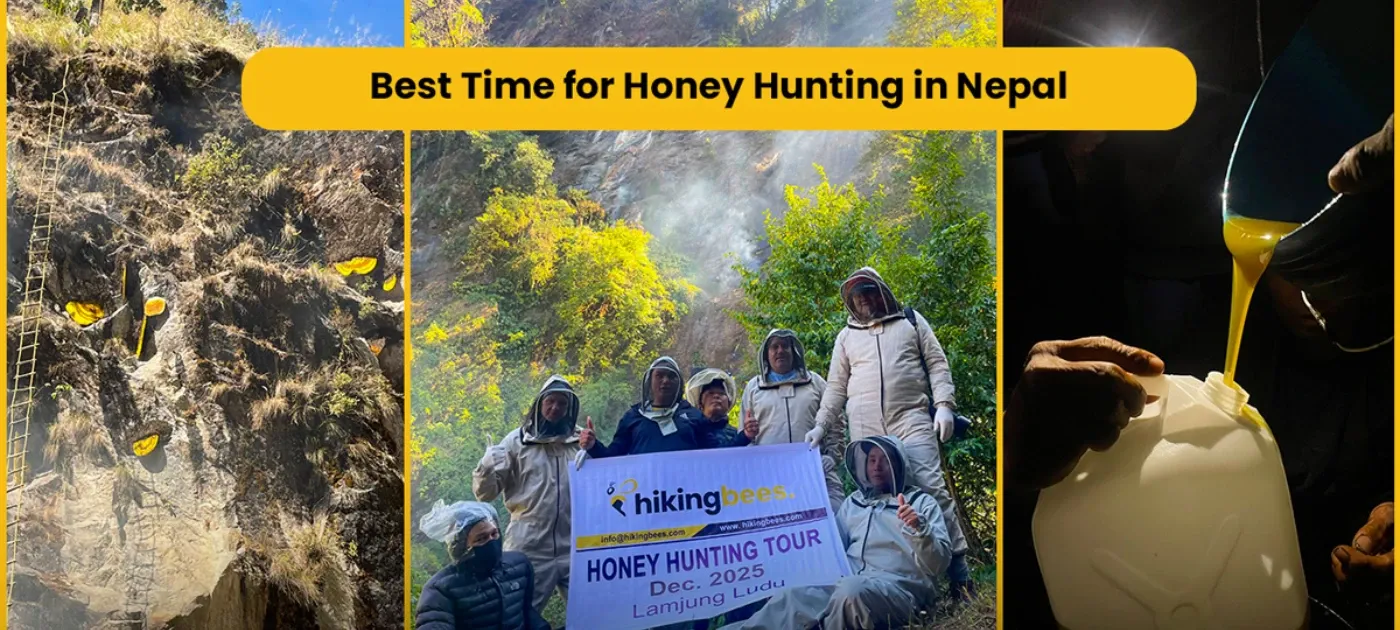

Before heading for Mad Honey Hunting, knowing the best time for honey hunting in Nepal is very important.
In this article below, we will discuss the best season and months for mad honey hunting, so that you don’t waste your time, money, and effort.
About Honey Hunting in Nepal
In the remote highlands of Nepal, the activity of harvesting honey from wild bees in the jungle is performed during the autumn and spring seasons. Honey Hunting, popularly known as Mad Honey Hunting, is an ancient practice in Nepal, which is one of the most thrilling and culturally immersive adventures for travelers who are looking for something beyond traditional trekking.
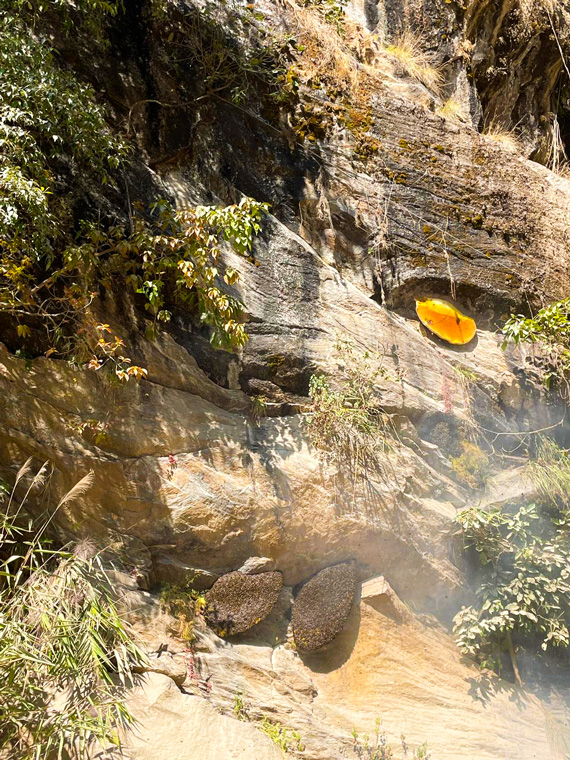
The Gurung and a few indigenous communities of Nepal are keeping this 7,500-year-old tradition alive, passing down the authentic method and use of local tools through generations. This rare activity is carried out twice a year from the hives of Himalayan Cliff bees, specifically Apis Dorsata and Apis Laboriosa, the world's largest honeybees.
These communities take care of these hives, and nobody can just go there and extract the honey. In order to hunt the honey from their area, we must take their assistance and permission.
Best Time for Honey Hunting in Nepal - What to expect?
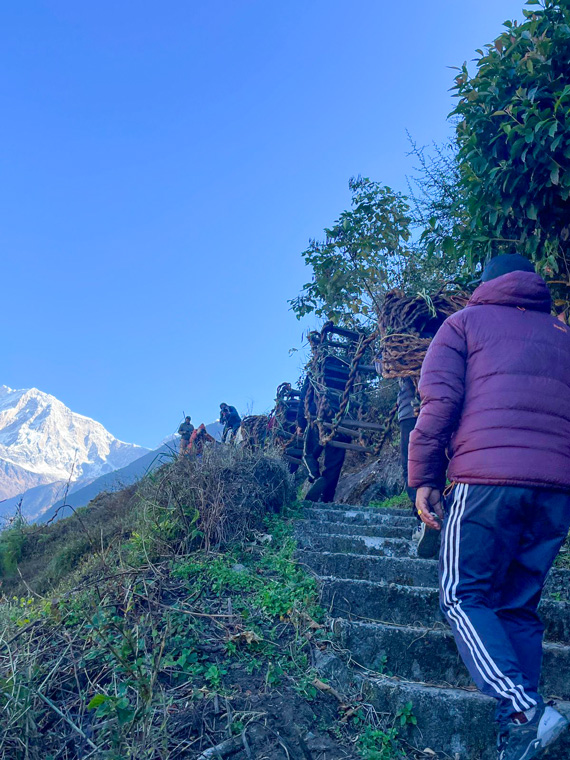
Timing is essential when it comes to honey hunting in Nepal. Every honey harvest should be productive, done when the weather is stable, while minimizing the impact on the environment. Here is what to expect in different seasons:
Spring (March - May) - The primary season
Spring is regarded as the most popular, productive, and best season for honey hunting. During this season, the honey achieves the right maturity period, creating the best harvests once a year. Honeybees are more active due to spring blossoms and stable weather conditions. The honey hunt yields a maximum amount of quality honey.
This is a rare chance to collect Red honey, i.e., Rich medicinal honey, which has high contents. Since the weather is stable, it makes climbing easier and safer. The traditional festivals and rituals of locals fall in this season, making wild honey hunting a thrilling communal event that allows visitors to experience this generational legacy. This season is ideal for those who want to get their hands on exclusive wild honey and witness the natural beauty.
If you are planning a honey hunting trip in spring, then you can plan it between (Mid-April to Mid-May), as the quality of the honey is best during this period.
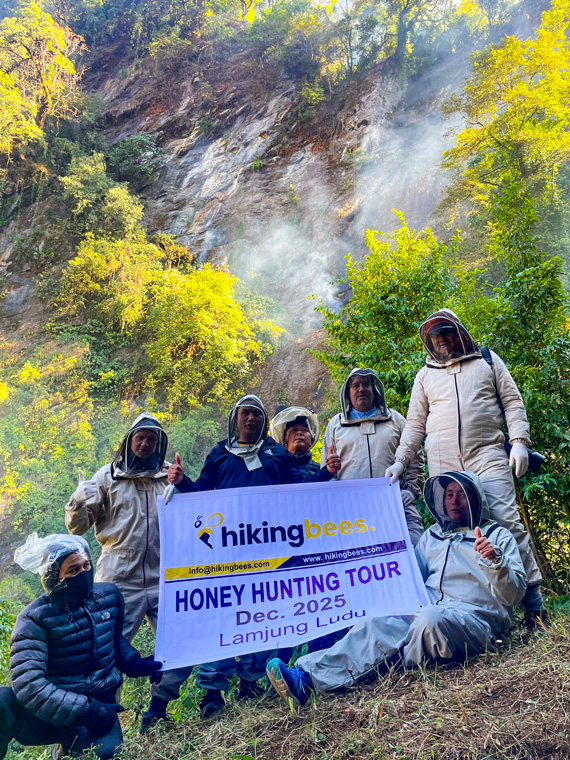
Autumn (September - November) - The secondary season
It is less common for wild honey hunting in this season; however, it is still practiced. The density of the honey might be lighter, less potent, and in smaller quantities. So chances of getting mad honey from the harvest of this season is very low.
Overall, the weather provides good trekking conditions and clear sky views with more cautious bees. This is a great alternative season for those whose main objective is to experience the traditional process of wild honey hunting along with trekking in nature.
If the autumn season is your preference for honey hunting, although you can do it throughout the season, we’d recommend you do it between (Mid-October to Mid-November), if possible.
Monsoon (June - August) - The risky season
Monsoon is not recommended for honey hunting. The heavy rainfall makes the cliffs slippery and dangerous which can be life-threatening. The disrupted flowering cycles interfere with honey production and reduce the productivity of honeybees.
The bees are more aggressive this season, which makes the entire process hazardous. Overall, these circumstances increase the risks for accidents. So this season is not recommended for wild honey hunting.
Winter (December - February) - The Low Season
This is the least favorable season for honey hunting in Nepal. Due to the cold temperatures, bees are inactive with little to no honey production, and climbing in winter is perilous for honey hunters as well.
The nectar flow is reduced in this season, which means honey is scarce in this season, so there is no point in conducting these activities.
Types of Honey in Nepal
According to different seasons, different types of honey can be collected in Nepal; here are some of its types:
- Mad Honey / Himalayan Red Honey - Hallucinogenic Rhododendron honey from high altitudes, floral forest, reddish appearance, contains psychoactive grayanotoxins causing dizziness, used medicinally or for ritual, not regular consumption.
- Spring honey- light consistency, less potent, harvested from mid-altitude flowers.
- White honey- Dense, darker color, more potent, harvested after the rainy season.
- Mid-Hill Honey- Golden appearance, moderately sweet, harvested from 800 to 3000 m high cliffs.
Best places for Honey Hunting in Nepal
Wild honey hunting is only possible in isolated places of remote areas in Nepal. There are a few places which are ideal for honey hunting:
- Bhujung, Lamjung
- Ludi, Lamjung
- Sikles, Kaski
- Ghalegaun
- Cliffs of Annapurna Region
Process of Honey Hunting in Nepal
According to Gurung customs, the visitors for honey hunting must wear an amulet, which is believed to protect against harm, illness, and evil spirits.
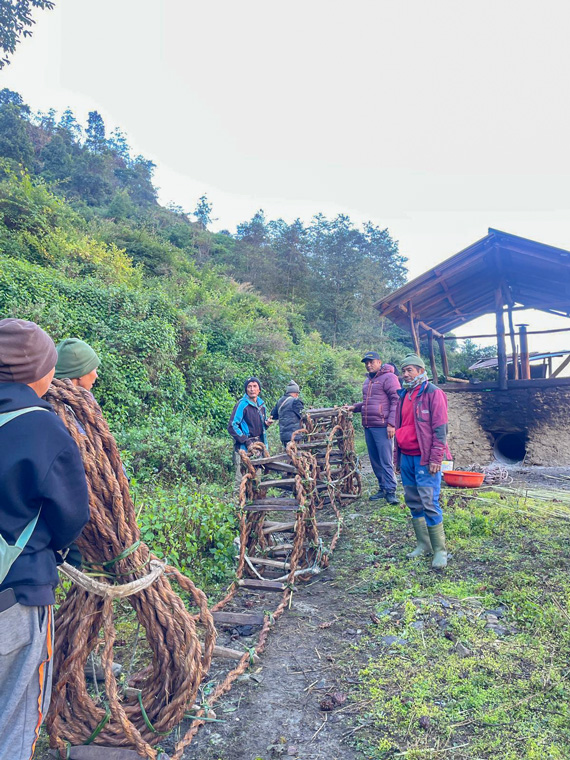
To reach the rare mad honeycombs, honey hunters climb hundreds of meters up unsafe cliffs relying solely on a rope ladder. They use only their bare hands and feet while bearing countless painful stings from the giant bees. This ancient method has never changed to this day, and their way of hunting honey is something that you won't see anywhere else.
Cultural & Historical Significance of Honey Hunting
For hundreds of years, people in Nepal have engaged in mad honey hunting, particularly in isolated areas like Jumla, Dolpa, Rukum, Bajhang, and Humla. The hunters, known as "Madhu Pahari," risk their lives to gather this rare honey by scaling steep cliffs without the use of contemporary safety equipment, keeping the tradition alive.
Throughout history, the native communities from these isolated areas have used the mad honey in small doses to treat various diseases such as hypertension, diabetes, aphrodisiac, etc and used as pain relievers like abdominal pain and dyspepsia. The line between its unique healing capabilities and toxicity is razor-thin. It is medicinal when consumed in small amounts; however, it can be harmful if consumed too much at a time.
Side Effects of Mad Honey:
It can distort your senses in unimaginable ways and lead to severe symptoms like:
- slowed heart beat
- paralysis
- vomiting
- Diarrhoea
- unconsciousness
- Body temperature fluctuations
- Visual hallucinations
- Blurring vision
- and even heart failure.
Historically, Mad honey was used as a biological weapon in 67 BC by the kingdom of Pontus against Roman soldiers. The neurotoxins and grayanotoxins found in mad honey disrupt cell communication, causing unusual sensations like tingling, numbness and temperature changes. Local honey hunters claim that taking four to five tablespoons of wild honey makes you unable to walk for 24 hours.
Despite risking their lives and the high market value of mad honey, which costs approximately $400 for 200g with high grayanotoxin content, the local hunters earn very less in comparison, .i.e $50 per kilogram, because for them it's more about maintaining the tradition and less about business.
In Conclusion,
Mad honey isn't easy to come by and so is the process of acquiring it. It requires skilled and brave individuals to harvest from cliffside hives within just a limited time of 2 weeks a year (ideal time for harvest).
The Gurung community preserves this rich cultural legacy of wild honey hunting, which I hope will be passed down to future generations.
I recommend you observe the whole process responsibly while supporting local communities and respecting their customs. Ensure that your activity follows sustainable practices.
With Hikingbees, we follow instructions from locals and their traditional costumes while implementing sustainable practices to minimize the impact on the natural environment from honey hunting activities.
We highly consider threats from climate change, reducing the bee population, and the sustainable harvesting process while respecting the host community. So that our natural and cultural resources never go scarce.
Are you looking for a honey hunting adventure in Nepal? Have you ever been in these activities before?
Let us know in the comments below, and feel free to reach out to us, where we can help you arrange your adventure of a lifetime.
FAQs
What is the best month for honey hunting in Nepal?
Spring is considered the best month for harvesting potent, rhododendron-infused mad honey, and autumn is considered best for providing a good trekking experience while honey hunting i.e. clear skies, stable weather, moderate temperatures, etc.
Is honey hunting dangerous?
Yes, it is considered one of the most dangerous occupations in the world, especially for traditional honey hunting, which is usually practiced in regions like the Himalayas of Nepal.
But as a visitor, it is totally safe and adventurous.
What makes Himalayan honey special?
The unique botanical source and composition of nectar in the honey harvested from the bees that forage on specific high-altitude plants make Himalayan honey special. i.e. Grayanotoxins.
Can beginners try honey hunting?
No! Beginners should not try the traditional way of wild honey hunting by themselves; however, they can participate in guided honey hunting tours provided by traveling agencies in Nepal.