
Is the Everest Base Camp Trek safe?
This is a common question for trekkers planning this adventure. It’s natural to feel curious before heading to the base camp of Mt. Everest, the world’s highest peak, rising to 8,848.86 m (29,031.69 ft).
Without knowing about your journey or destination entirely, it’s not a good idea to leave your comfort zone. You should be fully prepared by doing as much research as you can whenever it’s about adventure. Just because you see some images of your dream place on social media, don’t haste to make a decision quickly in the heat of excitement.
During the trek to the Everest Base Camp (EBC), you’ll make it above 5,000 m (16,404.2 ft), which isn’t that easy to do, especially for first-timers. There could be anything along the trail awaiting you about which you might be thoroughly unaware right now.
Anyway, you’ve come to the right place, as you’ll find the information about the trek’s difficulty level, altitude sickness, weather conditions, route safety, and more. We’ll help you prepare to hike on the same trail that the late Sir Edmund Hillary and Tenzing Norgay Sherpa walked during their Everest expedition, which they successfully summited on May 29, 1953, and wrote their name in the pages of history.
Keep reading our blog patiently. By the end, you will learn about the safety of the EBC Trek and how to prevent common risks, such as high-altitude sickness, so you can enjoy this trip to the fullest.
Is the Everest Base Camp Trek Safe
Yes, the Everest Base Camp Trek is generally considered a safe trek. It is a highly commercialised trek, situated in the Solukhumbu District of Koshi Province in Eastern Nepal, and suitable for both experienced and beginner hikers.
Even though its main point is EBC at 5,364 m (17,598 ft), the highest point is Kalapatthar at 5,555 m (18,225.07 ft), from where the view of Mount Everest (Sagarmatha in Nepali) and other neighbouring peaks in the same mountain range, Mahalangur, is exceptional. You’ll experience the mountains from a close distance.
Now, you might be thinking, How is this journey safe? In fact, it also varies depending on how you prepare yourself for this trip. Without proper preparation, even if the trek is easy, you’ll face challenges.
Additionally, several aspects make this journey safe. We discuss these factors and the preparation methods in the sections below.
How Is the Everest Base Camp Trek Safe: Key Factors
Here are some aspects that play a crucial role in making the Everest Base Camp a safe destination to travel.
Difficulty Level
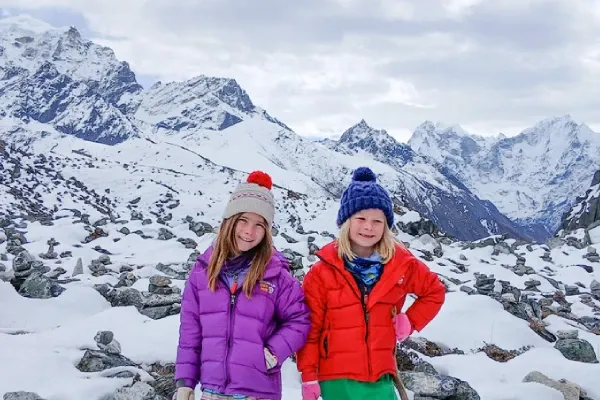
In terms of the difficulty of the EBC Trek, it is considered moderate to challenging, meaning it’s both easy and hard. However, don’t be worried, just because you find it also challenging at the same time. People from almost every age group, from children to senior citizens, have completed this trek so far.
Its duration and elevation make it a bit hard to walk if you aren’t a regular hiker. It typically ranges up to 14 days, and you already know the maximum height, which is Kalapatthar (5,555 m/18,225.07 ft). Nevertheless, if you exercise caution during the trek, which you’ll also learn later in another section, these two things don’t bother you that much.
Accommodation
As we discussed above, the Everest Trek is commercialised. As a result, accommodation facilities are something that you shouldn’t be worried about much in this journey. Every basic need in our modern life is available in all the hotels along the trail, such as electricity, Wi-Fi, and a hot shower.
You can have food of your preference. All these hotels have a menu with a variety of food items available. However, while you’re in Nepal, you'd better try the local cuisines, such as daal bhat, mo: mo, chowmein, and thukpa, or otherwise, you can have Western cuisine.
Trail Condition
The condition of the route that leads to the base camp is well-maintained and easy to hike. Yes, day by day, you’ll gain height, and that’s the other thing.
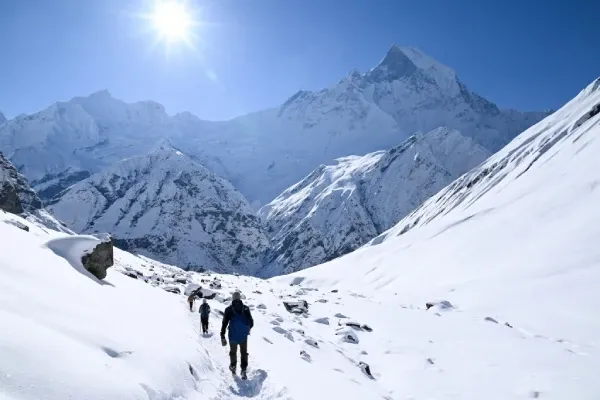
But the trail isn’t that technically demanding. You won’t go through any scary parts during the trek, like a narrow path or a steep path.
Moreover, you will meet mostly Sherpa people along the way, and they are one of the friendliest ethnic groups in the country. You won’t feel any kind of fear of local violence.
How Common Is Altitude Sickness On The EBC Trek
Altitude sickness during the Everest Trek is something that you can expect as normal. You know what? Even the starting point, Lukla, is situated at an elevation of 2,860 m (9,383 ft) above sea level.
So now, you can imagine yourself hiking from above 2,000 m (6,561.68 ft) to 5,000 m (16,404.2 ft). What do you think might happen if you’re from sea level and trekking at such a height for the first time?
There’s almost a 40% chance of getting sick during trekking if you take this adventure too lightly, just because you’ve learned its difficulty level, accommodation facilities, and trail condition, and your carelessness reaches its peak. Just know that high-altitude sickness doesn’t care about your age and fitness level.
Altitude sickness can occur to anyone at any time. See, we can’t eliminate the chance of suffering from it; however, we can at least prevent it from happening to us.
Below are some preventive methods of altitude sickness on the Everest Base Camp Trek:
Before The Trek
- Meet your doctor, check your health condition, and ask about the ideal medication for high-altitude sickness, which is acetazolamide (brand name Diamox).
- Prepare yourself by doing an exercise for at least an hour every day if you ain’t a regular workout person. The most common and effective workouts you can do for hiking at high elevations are stretching, squatting, swimming, running, cycling, push-ups, pull-ups, and meditation.
- Pack enough warm clothes, toiletries, snacks, and other gear in a quality trekking backpack.
- Hire a guide. They not only show you the correct way. They also provide you with information regarding the local culture, work as translators, and take care of your belongings if you forget anything.
- Buy travel insurance from a local insurance company of your country that includes altitude validity (minimum 6,000 m/19,685.04 ft), emergency helicopter rescue, medical evacuation, and trip cancellation. Although it’s not compulsory, it’ll be very helpful if you purchase it.
During The Trek
- A gradual ascent or walk is only recommended. The slower you hike, the more time your body gets to adjust to the lower air pressure.
- Consider taking frequent breaks of at least 5 to 8 minutes while hiking, and also spending an extra day in the same place once you reach 3,000 m (9,842.52 ft) for acclimatisation.
- Prioritise food high in carbs, such as rice, bread, potatoes, and pasta. High carbs mean a high level of calories and take time to digest, which helps your body stay energised for long hours.
- Keep your body hydrated by drinking at least 3 to 4 litres of water a day. Furthermore, eat foods such as apples and cucumbers. They contain a high amount of water.
- Eat a piece of garlic daily before starting the hike. Besides, include garlic soup with timur powder (Sichuan Pepper) in your meal, as garlic and timur help prevent altitude sickness.
- Don’t ignore the symptoms of altitude sickness: headache, fatigue, nausea, loss of appetite, insomnia, and shortness of breath. If you find any of these developing in your body, inform your guide forthwith, and they’ll bring you down to at least 500 m (1,640.42 ft) or further.
Best Time To Visit EBC
Whether trekking to the Everest Base Camp is safe or not also varies depending on which season you’re planning. We all know we have four seasons in a year, and among them, only two are recognised as the best times for the EBC Trek. They are spring and autumn.
Regarding the months, March, April, and May fall in spring, while September, October, and November fall in autumn. There are a few reasons that make these two the best seasons for trekking the EBC. Let me break down the reasons for you below:
Spring
- The day is warm and the night is moderately cool.
- Blossoming rhododendron (Nepal's national flower) and other wild flowers give colour to the route.
- A longer daylight time provides you with enough time to hike without any hurry.
- No snow on the trail, making hiking conditions easy.
- Local festivals such as Holi (the festival of colours), Nepali New Year, and Buddha Jayanti (the birthday of Lord Buddha) create joyful moments during the trek, allowing you to celebrate with the locals.
Autumn
- Stunning mountains are visible as it’s the post-monsoon season, resulting in clear skies.
- Temperatures are mild in the day and cold at night, but manageable.
- Very little chance of rainfall.
- Due to monsoon rain, the level of water in the waterfall and the river rises, making them look more beautiful.
- Green and lush landscapes make you take a break frequently for a photo session.
- Chance to celebrate Nepal's biggest festivals: Dashain and Tihar, with locals along the way.
Note: The weather cannot be certain and may change suddenly sometimes. Therefore, when planning to go on the EBC Trekking, check the weather forecast for your travel dates and keep monitoring it daily during the trek.